
Research
For Too Long, the North East Produced Footballers for Somewhere Else. Newcastle’s £190m Training Ground Could Change That
From Alan Shearer leaving for Southampton to Michael Carrick moving to London at 15, the North East has never struggled to produce footballers. It has often struggled to keep them. Newcastle United’s proposed Woolsington training complex could change the relationship between talent, opportunity and place.
Athagora Research · 20 August 2026 · 16 min read
For Too Long, the North East Produced Footballers for Somewhere Else. Newcastle’s £190m Training Ground Could Change That
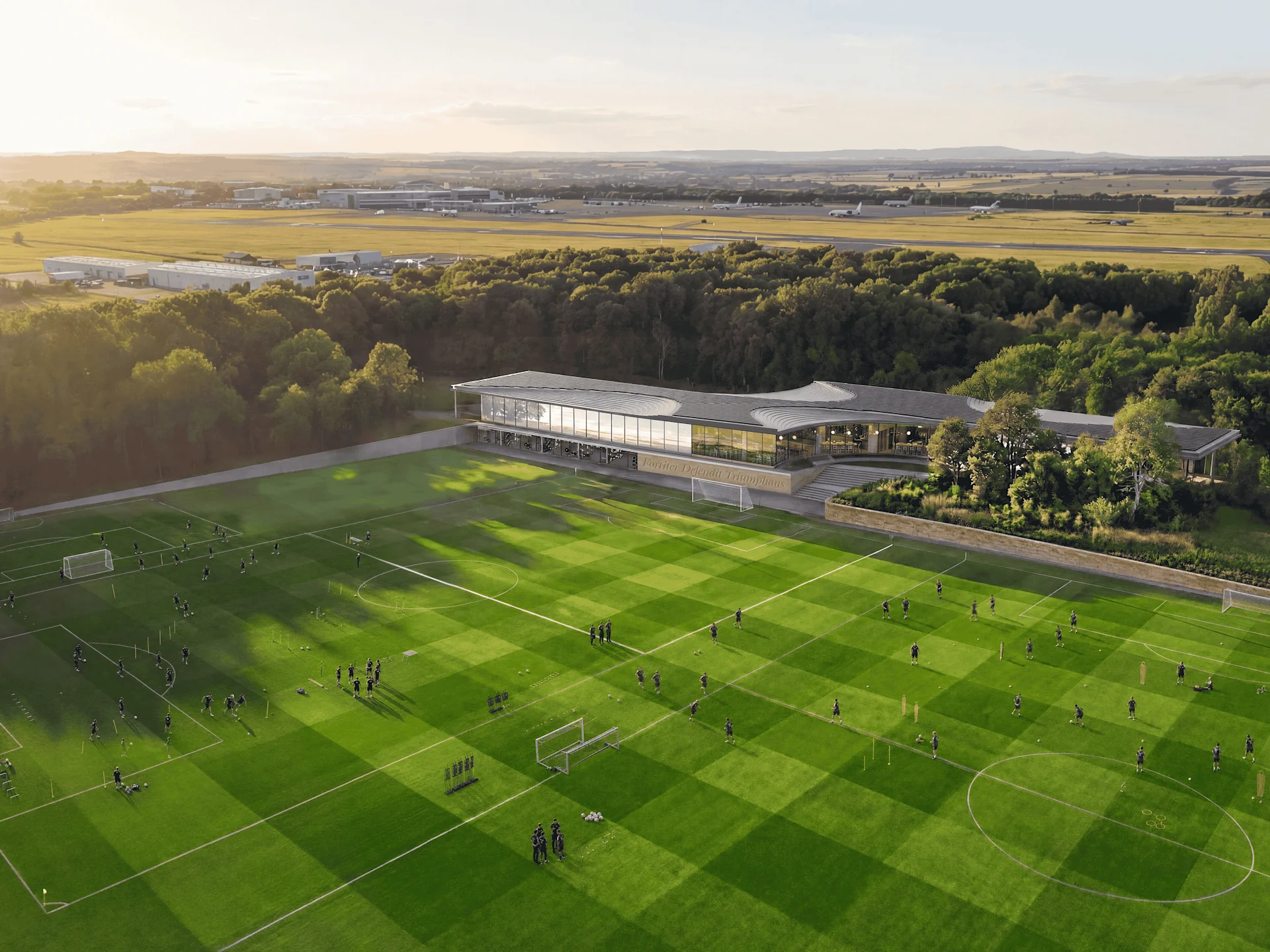
There is something slightly strange about describing Newcastle United's proposed £190 million Woolsington development simply as a new training ground. Yes, it will eventually contain the pitches, recovery areas, medical facilities, analysis rooms and performance infrastructure expected of a modern elite club. Newcastle have agreed to acquire the 260-acre Woolsington Hall estate, close to Newcastle International Airport, with the men's first team expected to move there for the 2029/30 season if planning proceeds as intended. The wider plans also leave space for dedicated women's and girls' facilities.
But there is another story here, and it is arguably much more important. It is about the North East of England, a region that has spent generations producing footballers good enough to reach the very top of the game while repeatedly watching many of those players travel elsewhere to fulfil that potential. The North East has never really had a talent problem. What it has not always had is the infrastructure, pathway and investment required to keep enough of that talent close to home.
The talent was always there
Go back through English football and an extraordinary number of careers begin around Tyneside, Wearside and County Durham. Alan Shearer was born in Gosforth and played for Wallsend Boys Club before becoming the Premier League's record goalscorer. Newcastle actually had him on trial as a teenager, yet Southampton were the club that eventually took him south and gave him his first professional opportunity. Years later, Newcastle paid a world-record £15 million fee to bring one of their own back to the city.
There is something symbolic about that story. One of the greatest strikers England has ever produced was already there. Newcastle did not have to search across Europe or South America for him. He was growing up only a few miles away. Yet his professional development happened on the south coast of England.
Michael Carrick followed a different route, but the underlying pattern was familiar. Carrick grew up in Wallsend, supported Newcastle and developed through Wallsend Boys Club before leaving the North East for West Ham at 15. He later spoke about how difficult that move initially was. He was still a child moving hundreds of miles from his family because another club appeared to offer a clearer route into professional football. Carrick eventually became a five-time Premier League winner and Champions League winner with Manchester United.
Peter Beardsley grew up in Longbenton and also came through Wallsend Boys Club, but his professional journey began elsewhere. Chris Waddle came from Felling, worked in food processing and played non-league football before Newcastle signed him from Tow Law Town. Steve Bruce came from Corbridge and spent part of his youth at Wallsend before building a career that eventually saw him captain Manchester United.
These careers are often presented individually, as remarkable stories of persistence or talent. Put them together, however, and they tell us something more interesting about the region. The North East was repeatedly producing footballers capable of reaching elite level, but the pathway between local talent and elite opportunity was not always as strong as the talent itself.
Before the academy comes the environment
Wallsend Boys Club might explain this better than almost any professional academy. The club says more than 90 professional footballers have passed through its system. Its former players include Shearer, Carrick, Steve Watson, Alan Thompson, Robbie Elliott, Lee Clark and Elliot Anderson.
Yet the most interesting part of Wallsend's history is not simply the list of famous players. The club was founded in 1904 in a community shaped by shipbuilding and heavy industry. It existed because local people wanted somewhere for young people to spend their time, develop discipline, compete and belong.
That is an important part of how football talent actually develops. Before an academy scout notices a young player, years of development may already have taken place. There has usually been a local pitch, a volunteer coach, parents finding the money or time for transport, school football, games against older children, arguments with friends, hours spent practising alone and endless small competitions that nobody outside the neighbourhood ever sees.
A professional academy often meets the player after their environment has already begun shaping them.
This is particularly relevant in the North East because football has traditionally been embedded deeply within everyday life. The sport exists through families, neighbourhoods, schools, local clubs, working men's clubs, Sunday teams and generations of supporters. Footballers have not only been produced by formal institutions. They have been produced by communities.
There is a striking contradiction in Wallsend's own history. During periods when former players were generating millions of pounds in transfer fees and playing at the highest levels of the sport, the community institution that helped develop many of them experienced financial difficulties of its own. English football was extracting enormous value from talent developed in the North East, while the infrastructure that helped create some of that talent did not always receive equivalent investment in return.
Why £190 million means something different here
A new football training centre cannot reverse decades of regional inequality. It would be unrealistic to suggest otherwise. The North East has experienced industrial decline, lower levels of private investment than some other English regions and the long-term consequences of the disappearance of industries that once supported entire communities.
Shipyards closed. Coal disappeared. Employment structures changed. For many young people, the idea that serious opportunity might require leaving the region became familiar.
Football remained.
That history helps explain why football occupies such a particular place in cities such as Newcastle and Sunderland and in towns across Gateshead, Wallsend, South Shields, Blyth and County Durham. The relationship is not simply transactional. For many families it is inherited. Children can understand what Newcastle United means before they properly understand what a football club is as a business.
That is why a £190 million investment into elite sporting infrastructure carries a different significance here. It is not simply money being spent so professional footballers can recover in better facilities. It is capital being placed into the North East with the intention of creating an institution that could remain there for decades.
There is also something almost circular about the Woolsington location itself. Former Newcastle chairman Sir John Hall had looked towards the estate during the 1990s when thinking about the club's future training and academy infrastructure. More than three decades later, Newcastle are returning to the same area with financial resources and ambitions that would have been difficult to imagine at the time.
The opportunity now is not simply to copy Manchester City, Chelsea or Paris Saint-Germain. Newcastle have an opportunity to create an elite environment that makes sense specifically for the North East.
Newcastle's leadership is changing the strategy around the team
The timing of Woolsington also matters because Newcastle United itself is changing.
The first few years following the 2021 takeover were dominated by an immediate problem. Newcastle needed to improve the football team quickly. The club went from a relegation battle to Champions League qualification and eventually ended a 70-year wait for a major domestic trophy.
That first stage was visible. Supporters could see the new players arriving and see the results changing.
The next stage is less glamorous, but potentially more important.
Newcastle are increasingly building the organisation around the football team.
David Hopkinson became chief executive in September 2025 after a career that included senior leadership roles with some of North America's biggest sporting organisations. Ross Wilson arrived as sporting director a month later, with responsibility stretching across sporting strategy, recruitment and development for the men's team, women's team and academy. Jack Ross had already moved into a newly created Head of Football Strategy position, designed to help develop a more consistent philosophy across those areas of the club.
That structure tells us something about the direction Newcastle are taking.
The club is trying to become less dependent on individual decisions and more capable of thinking across entire player pathways. Recruitment, loans, academy development, women's football and the first team increasingly sit inside a wider football strategy rather than operating as separate worlds.
In June 2026, Newcastle strengthened the executive side again with new appointments covering people, revenue and marketing. The club described the changes as part of building a high-performing organisation capable of sustainable long-term success. Newcastle's latest financial results also showed why the commercial side matters, with turnover reaching £335.3 million and commercial revenue increasing by 44 per cent in the year to June 2025.
This might sound like corporate restructuring that has little to do with a child playing football in Wallsend.
It does.
Modern spending rules mean Newcastle cannot simply rely on the wealth of their owners every time they want to improve the squad. The club needs to generate more of its own revenue. It needs better infrastructure. It needs stronger commercial partnerships. It needs an academy capable of developing valuable players. It needs a women's operation capable of growing alongside the men's side. It needs people responsible for connecting those different areas.
The strategic question has therefore changed.
It is no longer simply: which players can Newcastle buy?
It is increasingly: what does Newcastle United itself need to become?
Woolsington is one answer to that question.
The training ground is physical infrastructure, but it is arriving alongside organisational infrastructure. A chief executive focused on long-term growth, a sporting director responsible for the wider football system, a dedicated football strategy function and a strengthened commercial team all point towards Newcastle trying to build something that survives individual transfer windows, managers and seasons.
That could become especially important for academy players.
If Newcastle genuinely develop a consistent football philosophy from the academy through to the first team, the pathway for a young footballer becomes easier to understand. The club can think more carefully about what type of players it wants to develop, where loans fit into that development, when a young player needs first-team exposure and how talent can move between different levels of the organisation.
For North East players, that could matter enormously.
The region has never needed Newcastle to simply scout more children. It needs a club capable of turning local potential into sustained professional opportunity.
The danger, of course, is that becoming a bigger global organisation could move Newcastle in the opposite direction. An academy with greater resources can recruit nationally and internationally. Data can identify talented teenagers thousands of miles away. Commercial growth can push a club towards global audiences. An enormous private training complex can become physically and culturally separated from the communities around it.
Newcastle therefore face an interesting choice.
They can become an international football institution that happens to be located in the North East, or an international football institution whose North East identity remains one of its greatest advantages.
The strongest version of this strategy does both.
It attracts talent from around the world while becoming better at recognising talent growing a few miles away.
It develops international supporters without treating local supporters as an afterthought.
It builds an elite academy without forgetting the grassroots clubs that were developing players long before £190 million training grounds existed.
And it grows commercially enough that when Newcastle develop another exceptional local player, selling him does not automatically become the financially attractive decision.
That is why Woolsington should not be viewed in isolation. It is part of a broader attempt to move Newcastle from a club with an increasingly successful football team into an organisation designed to sustain that success.
The first phase of Newcastle's transformation changed the team.
This phase is about changing the institution.
Why should a 15-year-old have to leave?
The most important question may not be whether Woolsington helps Newcastle attract another international signing. Elite facilities certainly matter to professional players. Footballers and their representatives consider the manager, squad, wages, medical support, training environment, city, family life and the seriousness of an organisation when making career decisions.
But Newcastle should also be asking a more local question: how many talented young players from the North East have historically felt that they needed to go somewhere else to receive the best development?
Imagine being Michael Carrick at 15. Today, we can look back at the finished career and see Manchester United, England and the Champions League. At the time, he was simply a teenager from Wallsend leaving his family and moving to London because West Ham offered a pathway that felt more convincing.
That is one of the human realities hidden behind the phrase "player development". Sometimes development means a child leaving everything familiar because opportunity is concentrated somewhere else.
There will always be good reasons for young players to move between academies. Different coaches, playing styles and environments suit different people. Newcastle cannot and should not try to keep every footballer born within the region. What the club can change is whether leaving feels necessary rather than optional.
A talented 14 or 15-year-old from Wallsend, Blyth, Gateshead, Sunderland or County Durham should not automatically assume that London, Manchester or another football centre offers a more serious future simply because the infrastructure there is better.
How many Dan Burns disappeared?
Dan Burn's career captures another side of the issue. Born in Blyth and raised as a Newcastle supporter, he was released by Newcastle's academy as a child. He played locally, worked part-time in a supermarket and eventually entered professional football through Darlington. His career took him around England before he finally returned to play for the club he had supported growing up.
It is a brilliant story. It is also worth looking at it from another direction.
How many other children released at 11 or 12 never found another route back into professional football? How many developed physically later than the players selected ahead of them? How many families could not keep travelling several nights every week? How many young players lost confidence after rejection? How many stopped playing before anyone discovered what they might have become at 18 or 19?
We will never know, because the players who disappear from the pathway leave very little data behind.
That should be one of the most interesting areas for a modern Newcastle academy. Better infrastructure should not simply mean better equipment. It should mean becoming more sophisticated in understanding development itself.
Children mature at different rates. Confidence changes. Family circumstances affect performance. Transport matters. Poverty matters. Coaching exposure matters. Some children have been receiving structured training since they were six, while others may arrive at 13 with enormous natural ability but very little formal coaching.
A serious talent system should be capable of distinguishing between lack of ability and lack of opportunity. They are not the same thing.
Elliot Anderson presents a different problem
Elliot Anderson represents another part of the North East talent story. He grew up in Whitley Bay, played for Wallsend Boys Club and progressed through Newcastle's own academy into the first team. In many ways, he followed exactly the pathway Newcastle would want more local young players to follow.
Then came the realities of modern football finance.
Newcastle sold Anderson to Nottingham Forest in 2024 while managing Premier League financial regulations. He continued developing and eventually reached the England senior team. The circumstances created an uncomfortable contradiction. Clubs are encouraged to invest heavily in their academies and produce local players, but those same academy players can become particularly attractive financial assets because selling them can generate significant accounting profit.
The next stage of Newcastle's development therefore cannot simply be about producing another Elliot Anderson. It must also be about building a club commercially strong enough that when the next exceptional local player appears, keeping him is a genuine choice.
That involves more than the training ground. Revenue growth, sponsorship, commercial development, stadium strategy and the wider strength of the organisation will all matter. But Woolsington forms part of the same transition. Newcastle are trying to build an institution around the team that is capable of supporting ambitions that previously outgrew the club's infrastructure.
The women's game cannot be an afterthought
The same conversation becomes even more important when looking at women's football.
For generations of talented female players from the North East, leaving the region was often simply part of trying to reach the highest level. Jordan Nobbs was born in Stockton-on-Tees and developed through Sunderland before building an elite career elsewhere. Lucy Bronze also has strong North East roots and spent part of her early development in the region before her career took her around England and Europe.
When a region does not have an elite local destination, talent moves.
That does not only affect the players who leave. It affects the young people watching them. A girl growing up in Gateshead, Stockton or South Shields is more likely to imagine an elite football career when she can physically see that pathway operating around her.
Imagine the difference by the early 2030s if a girl in the North East can see a professional women's team, an academy pathway, elite coaching, sports science, analysis and performance facilities all connected to Newcastle United and all situated within her own region.
That changes aspiration before it changes performance.
Infrastructure sends a message about what an organisation considers important. Where teams train, what resources they receive and whether girls can see a credible route towards elite football all influence how seriously young people view that pathway.
If Woolsington becomes an elite environment for men's football while women's development remains something that is added later, Newcastle will have missed part of the opportunity.
Investment can make people stay
One of the biggest potential effects of the project may have nothing to do with players.
Elite sporting infrastructure attracts people around the players too. Coaches, analysts, physiotherapists, psychologists, nutritionists, doctors, sports scientists, recruitment specialists, data professionals and operational staff all need somewhere to build careers.
For years, talented graduates from North East universities have often faced the same wider regional question as footballers: do I stay, or do I move somewhere such as London or Manchester where there appear to be more opportunities?
A major sporting institution can alter that equation.
A world-class training environment can attract specialists into the region, but just as importantly, it can give people already living there more reasons to remain. Former footballers may return. Coaches may establish careers locally. Sports technology businesses may emerge nearby. Universities may build deeper relationships with professional sport. Local students may see routes into sports science, data analysis, medicine and performance that previously felt distant.
That is when a football club starts functioning as more than an entertainment business.
It becomes an anchor institution.
The North East should not just produce talent for everybody else
For decades, the North East has been exceptionally good at producing things English football values: players, managers, coaches, supporters, atmosphere, identity and football culture.
What the region has not always been equally successful at doing is keeping enough of the value created by those things.
There is a wider regional development lesson here. A successful area should not simply produce talented young people who then become successful somewhere else. It should create enough opportunity that staying becomes a serious option.
Leaving Newcastle for London should be something somebody does because they want to experience London. It should not automatically feel like the price they have to pay for ambition.
Football is no different.
If Newcastle's investment eventually means a talented player can develop at home, a coach can build a career at home, a sports scientist can stay after graduating and a young girl can see a genuine elite pathway without immediately looking hundreds of miles away, then the effect of Woolsington becomes much larger than the first-team training schedule.
£190 million cannot manufacture another Alan Shearer
None of this means spending £190 million automatically produces another Alan Shearer.
Football talent does not work like that.
You cannot order another Michael Carrick. A sports scientist cannot manufacture another Chris Waddle. The next exceptional player might come from a Premier League academy, a grassroots club, a school team, futsal, a cage, a park or an environment nobody is currently watching closely enough.
Footballers emerge through complicated combinations of genetics, personality, family, neighbourhood, coaching, opportunity, competition, culture and chance.
That is precisely why environment matters.
Newcastle cannot guarantee that the next great North East footballer will emerge from Woolsington. What they can do is reduce the chances that the region fails to recognise them.
They can make it less likely that a talented 15-year-old feels they have to move hundreds of miles away because another academy appears more serious. They can become better at recognising late developers. They can strengthen relationships with the grassroots organisations already doing much of the early work. They can create stronger pathways for girls. They can give coaches and specialists reasons to build careers in the region.
And perhaps, over time, they can change something deeper.
For generations, the rest of English football has benefited enormously from what the North East produces.
The players were already there. The football culture was already there. The communities were already there.
What has often been missing is investment on the same scale.
Newcastle's £190 million training ground will eventually be judged through trophies, academy graduates and the quality of the footballers who train there. But its most important legacy could be much harder to measure.
It could help create a North East where talented people no longer have to leave simply to discover how good they can become.
That would be worth far more than a new training ground.